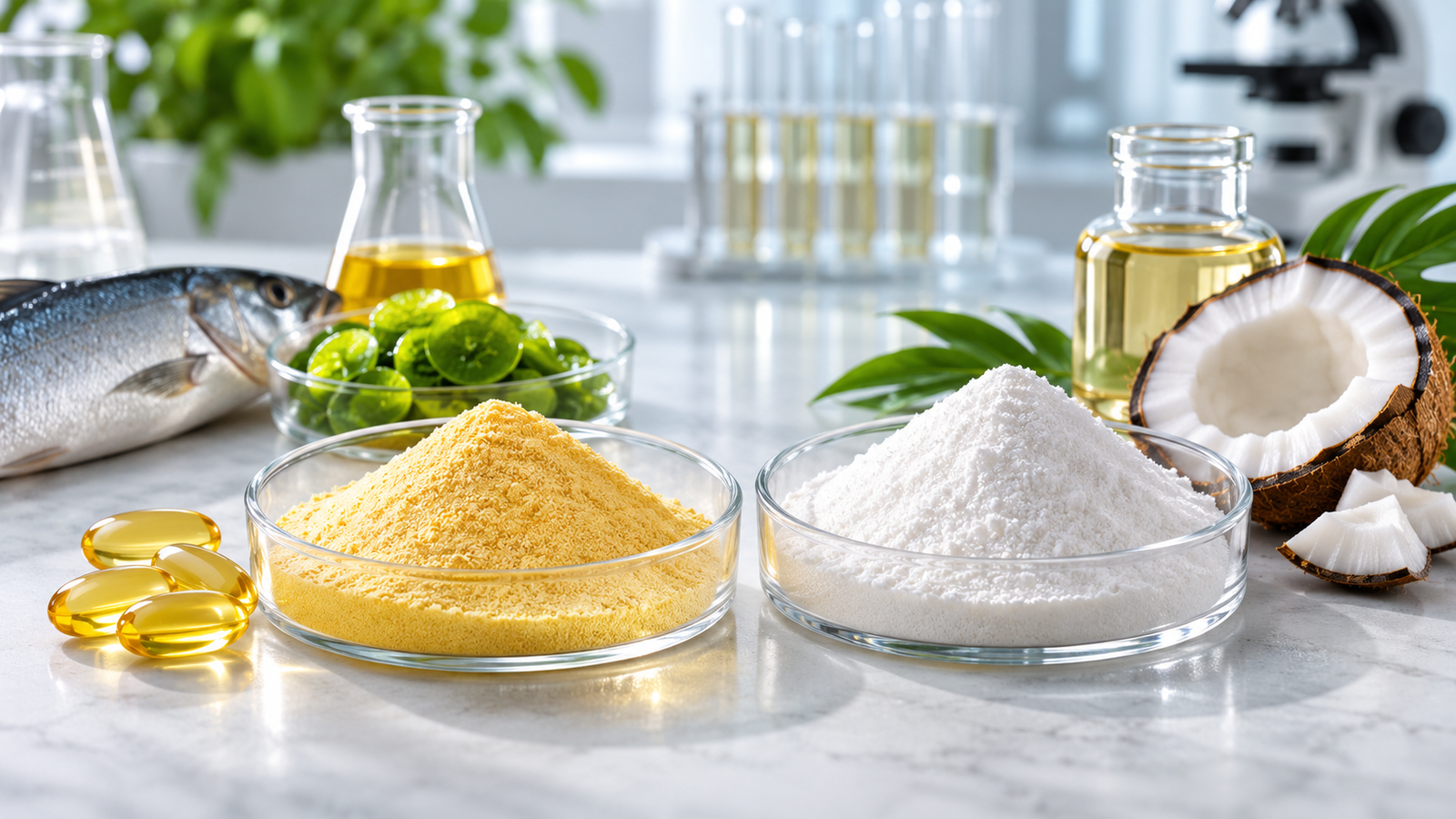
Omega-3 and MCT powders often sit side by side in the same product range, yet they behave very differently. Both allow liquid oils to be used in sachets, beverage powders, capsules and nutrition blends. The similarities largely end there.
EPA and DHA are long-chain, highly unsaturated fatty acids that react readily with oxygen. Medium-chain triglycerides, by contrast, are saturated and far more resistant to oxidation. As a result, the questions a formulator should ask about each powder are not the same.
Why Stability Comes First for Omega-3 Powders
When EPA and DHA oxidise, they form compounds that can give a fishy or rancid taste and smell, even at low levels. A product may still contain its declared omega-3, yet a consumer who opens a fishy sachet is unlikely to buy it again. Oxygen, light, heat, moisture and trace metals such as iron and copper can all speed up this process.
Research on retail supplements shows how real the problem is. A survey of 171 North American omega-3 products assessed primary, secondary and total oxidation in products already on the market [1]. A separate storage study found that both delivery form and packaging affected oxidative and sensory stability, with syrups oxidising more than capsules or chewables [2].
Taken together, these findings suggest that the format and pack matter as much as the oil itself.
Fish and Algae-Derived Sources
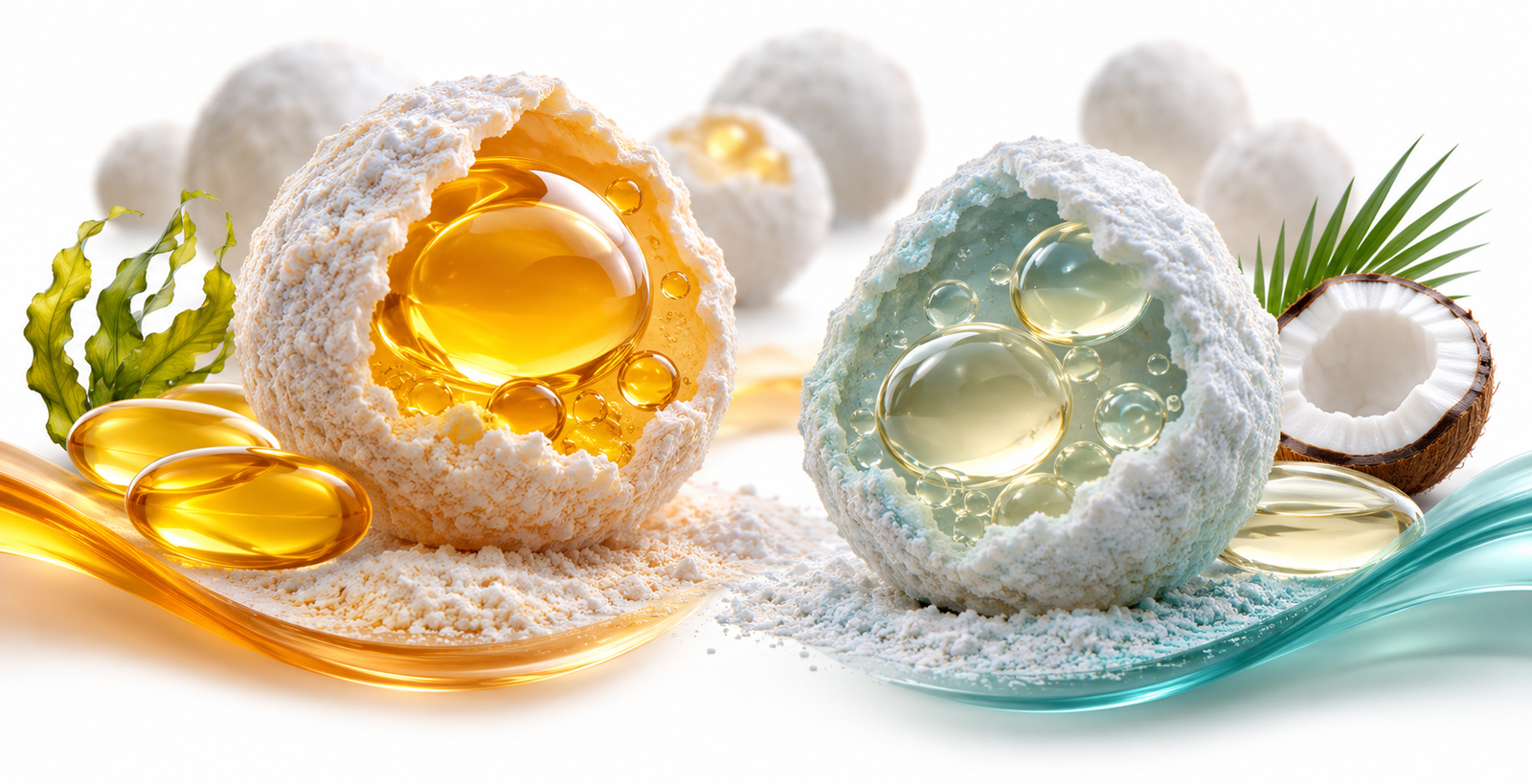
Fish oils typically supply both EPA and DHA, in ratios that vary by source. Algae-derived oils provide a non-fish source and are often rich in DHA, although some also contain EPA. The choice usually follows the label claim and target market.
Vegetarian or vegan suitability deserves a closer look. It depends on every component of the finished powder, not only the oil.
Reading an Omega-3 Specification
The first figure to check is the EPA and DHA content per gram, since it sets the dose per serving and the amount of powder required. Total oil content alone does not tell the full story.
Oxidation is usually described with three values:
- Peroxide value: reflects early-stage oxidation
- Anisidine value: reflects later-stage products linked to off-flavours
- TOTOX: combines them as 2 × peroxide value + anisidine value [1]
These values are useful, but only when they are measured the same way. For a powder, they are usually determined on oil extracted from it, and the extraction method affects the result. Added flavours can also interfere with the anisidine test.
Sensory data and stability results over time complete the picture. Buyers should also ask for source, vegan and allergen declarations.
MCT Powders: Handling and Oil Content Matter More
MCT oil consists mainly of caprylic (C8) and capric (C10) triglycerides. Because it is saturated, fishy off-notes are not a concern. The key questions concern how much oil the powder carries, how it mixes and how it feels in the mouth.
Oil content is the starting point.
To deliver 1 g of MCT oil per serving, a 50% oil powder requires 2.0 g and a 70% oil powder about 1.43 g. These are illustrative calculations rather than product specifications.
Higher oil content reduces the powder needed, but the grade must still pass flow, mixing and shelf-life tests.
The C8:C10 ratio, dispersibility in water, milk or protein shakes, and flow during sachet filling are equally important. Vegan, dairy-free and allergen declarations should cover the full powder, not only the oil.
Omega-3 and MCT Powders at a Glance
| Question | Omega-3 / DHA powder | MCT powder |
|---|---|---|
| Main formulation risk | Oxidation and fishy notes | Mixing, mouthfeel and oil content |
| Key quality data | EPA/DHA content, peroxide value, anisidine value, sensory | Oil content, C8:C10 ratio, dispersibility |
| Typical formats | Sachets, beverage powders, fortified foods, capsules | Instant drinks, shakes, creamers, bars |
| Essential test | Storage trial in the finished product | Mixing trial at the serving dilution |
Testing in the Finished Product
A powder that seems neutral in water can develop off-notes in a warm drink, an acidic beverage or a blend containing minerals. For this reason, storage trials in the finished format and its packaging are worth planning early.
Accelerated studies help compare grades quickly. However, they do not replace real-time data at the actual storage conditions.
Partner With IntoNaturals
At IntoNaturals, our Stavique™ platform is built for ingredients sensitive to oxidation, moisture and light, including omega-rich oils. Dryviq™ focuses on converting liquid oils into free-flowing powders suited to dry formats. In each project, we agree the specification and sensory targets with the customer and then confirm them in the real formulation. Explore our Nutritional & Functional Oil Powders and technology platforms.
Working on an omega-3 or MCT product? Contact our team with the oil, target dose and finished format, and we will recommend a powder grade to sample.
Contact Us →Frequently Asked Questions
Why does an omega-3 powder start to smell fishy after a few weeks?
Oxidation is the most common cause, but odour alone does not prove it. Starting oil quality, packaging, storage conditions, ingredient interactions and measured oxidation values all need to be reviewed.
Is algal DHA the same as fish oil?
No. The two differ in source and fatty-acid profile, so the EPA and DHA content on each specification should be compared directly.
Does MCT powder need oxidation protection?
Much less than omega-3, because MCT oil is saturated. Handling and dispersibility usually matter more.
How should MCT powders with different oil contents be compared?
By calculating the powder needed per serving for the target MCT dose, then testing mixing at that level.
Can oil powders be used in tablets?
Sometimes. It depends on the grade and the compression conditions, so trial samples are recommended.
Regulatory note
Composition, labelling and permitted uses of omega-3 and MCT ingredients vary by grade and market.
References
- Jackowski et al. (2015). Oxidation levels of North American over-the-counter n-3 (omega-3) supplements and the influence of supplement formulation and delivery form on evaluating oxidative safety. Journal of Nutritional Science, 4, e30. doi:10.1017/jns.2015.21
- Yenipazar, H. and Şahin-Yeşilçubuk, N. (2023). Effect of packaging and encapsulation on the oxidative and sensory stability of omega-3 supplements. Food Science & Nutrition, 11(3), 1426-1440. doi:10.1002/fsn3.3182
- Albert, B.B. et al. (2013). Oxidation of marine omega-3 supplements and human health. BioMed Research International. doi:10.1155/2013/464921